Reading in the First School Year: Supporting Your Child at Home
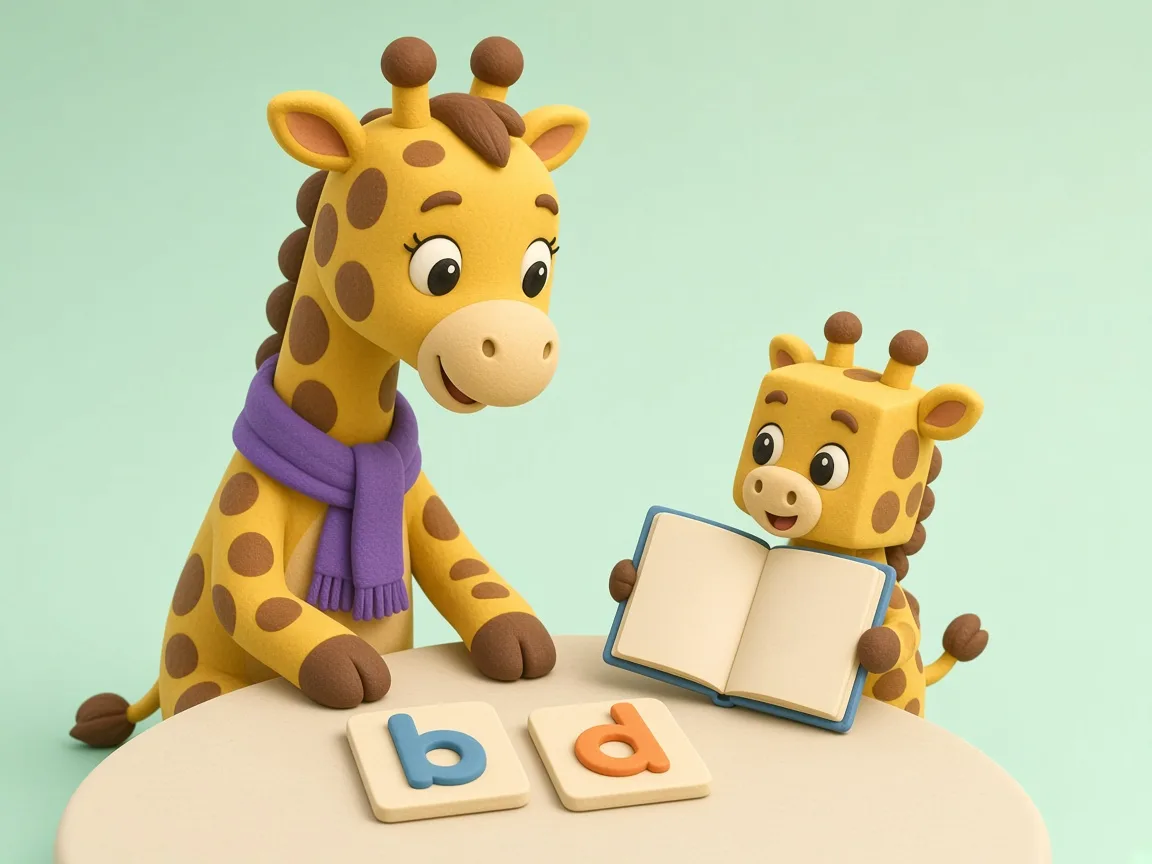
In the Dutch school system, reading in the first school year starts in groep 3, the first year after the kindergarten years, usually around age six. That grade number is specific to the Netherlands. Other countries start formal reading at different ages and call the year something else, so this article uses "the first school year" and "groep 3" only for the Dutch setting.
Here is what to expect, how to practise words at home, and how to handle the b and d mix-up. LogiLand is practice software for short play moments. It is not a reading diagnosis and not a treatment for dyslexia. When reading stays stuck, a teacher or speech therapist looks.
What happens in the first formal reading year?
Children learn letters and sounds in a set order. Then they read short words first, and longer words and sentences later. Schools follow a reading programme, and that programme decides which words come up and when.
So the word lists differ from school to school. Ask the teacher which letters and words are being taught right now. Then you can practise at home what your child has just met in class.
Better practice with clients?
LogiLand is developing a fun app that makes speech therapy exercises more fun. You assign them, the child practises at home, you see the progress.
Request accessWhat is normal at this age?
The pace varies a lot. A child who reads whole sentences and a child who is still linking letters to sounds can sit in the same class. A few things are common:
- Children read sound by sound first, then blend the sounds together.
- Reading is slow and takes a lot of effort.
- A child may guess a word from its first letter.
- Children often understand a read-aloud story better than a text they read themselves.
That last point makes sense. Understanding takes less effort than decoding. Keep reading aloud, even when your child reads alone.
My child finds reading hard: what can I do at home?
Many parents recognise this worry. A few calm habits help.
Keep it short
Ten minutes is usually enough. One short moment that goes well beats a long session that ends in tears.
Choose a book at the right level
A book that is too hard causes frustration. Pick one where your child can read most of the words alone. Reading many words correctly builds confidence.
Take turns
You read one sentence, your child reads the next. If your child gets stuck, give the sound or the word and carry on. Afterwards, talk about what happened in the story.
Practise words your child enjoys
Words from your child's own world stick better: friends' names, a favourite animal, a club name. Write them on cards and read them together.
Link sounds to meaning
Split a word into sounds and blend it again: m-oo-n, moon. Then ask what it means or where you see it. That way reading is more than saying sounds.
Combine reading with talking
Talking about a picture, a word or a story supports reading. A child who knows many words and can retell a story usually finds reading easier. For more ideas, see language exercises at home.
Use practice software as an extra
Reading exercises in LogiLand are short games next to school lessons and your own attention. They do not replace the teacher or reading aloud.
Confusing b and d
Many children mix up b and d. Both letters have a round part and a stick. Only the direction differs. For a beginning reader that is a hard difference, especially when the round part faces left or right.
A few ideas:
- Feel the difference. Trace b and d in sand, on a back or in the air.
- Use a memory trick. A common one: make a thumbs up with both fists. The left hand looks like a b, the right hand like a d. Ask the teacher which trick the class uses so you do the same at home.
- Make word pairs. Read pairs such as bark and dark, bad and dad, or the Dutch pairs bal and dal, bak and dak. Say them aloud and notice what changes.
- Talk about the sound. A b is made with the lips together. A d is made with the tongue behind the teeth. Let your child feel it.
Mixing them up is part of learning. It is not a sign that something is wrong. If it stays stubborn for a long time, mention it to the teacher, who sees how reading develops in class.
Why reading stays stuck for some children
Learning to read asks for many things at once: knowing letters, hearing sounds, blending words and finding meaning. When one link is weak, reading feels heavy. Sometimes hearing plays a role, sometimes vocabulary, attention or tiredness. Sometimes there is no clear reason.
As a parent you do not have to work that out. Your job is to keep reading enjoyable and pass on what you notice to school.
When should someone take a closer look?
Talk to the teacher if you notice that:
- your child remembers few letters or sounds after several months of lessons;
- reading often leads to tears, anger or avoidance;
- your child no longer recognises words they read before;
- your child struggles to hear sounds or to speak clearly;
- you worry about hearing or sight.
The teacher can look at the reading process and refer on if needed. A speech therapist can look at language, speech sounds and questions about hearing. A diagnosis such as dyslexia comes from a specialist, not from an app or an article.
For more ideas at this age, see speech therapy exercises for a 6 year old.
Practical tips for every day
- Ten minutes together beats an hour that feels like a chore.
- Give the sound instead of a lecture when your child gets stuck.
- Stop on a success. End with a sentence that went well.
- Keep reading aloud. Stories keep the wish to read alive.
- Do not compare. Another child's pace says little about yours.
Closing thought
The first reading year is the start of a long journey. Your child needs time, short practice moments and a calm adult nearby. If reading keeps stalling, ask the teacher or a speech therapist to take a look. LogiLand can add playful repetition, but it does not take over their work.
Better practice with clients?
LogiLand is developing a fun app that makes speech therapy exercises more fun. You assign them, the child practises at home, you see the progress.
Request access