Dyslexia symptoms: what parents see in reading
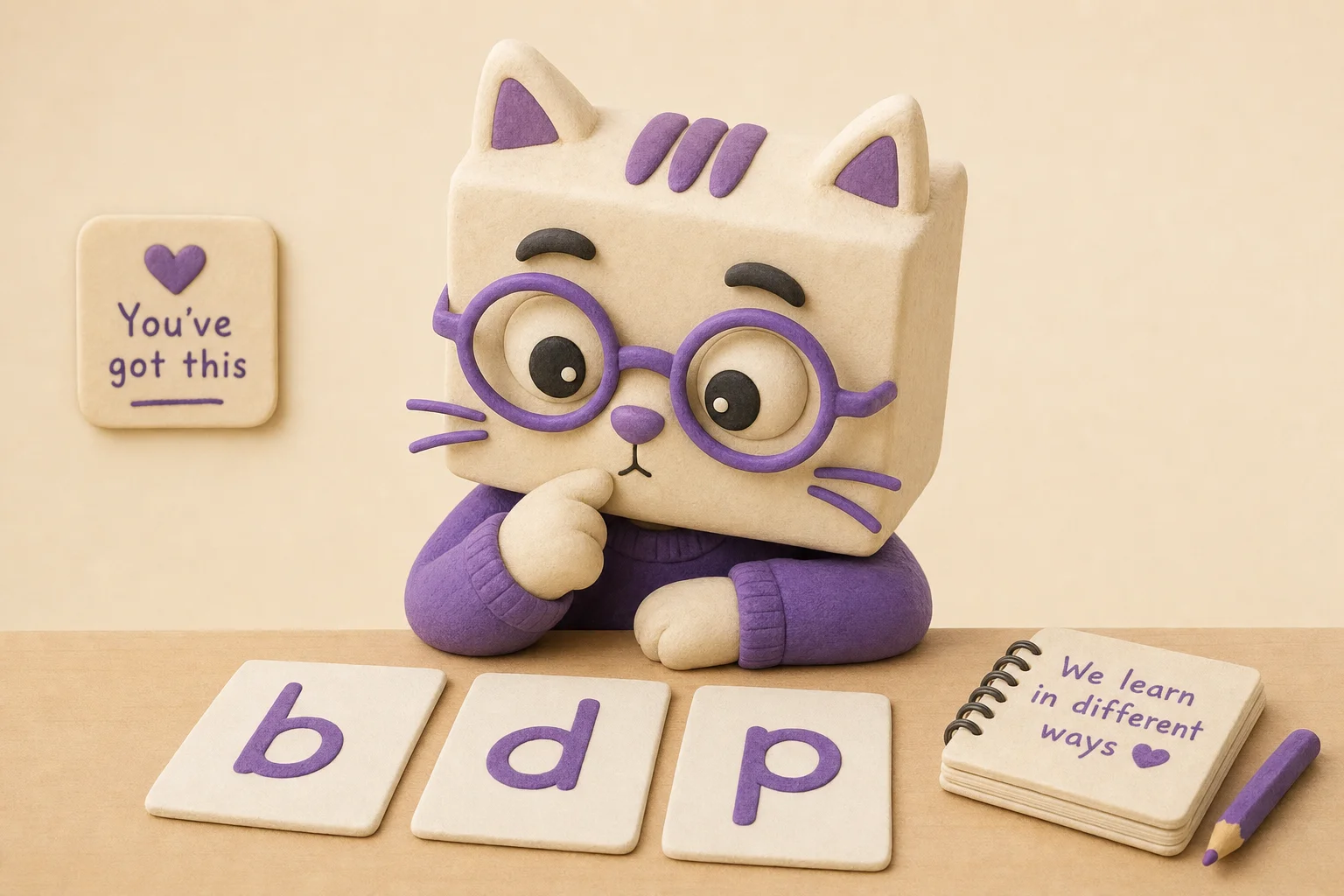
Your child reverses b and d, reads slowly, and someone in the family mentions dyslexia. The search term dyslexia symptoms produces lists that already "fit" a beginner in the first weeks of groep 3 (the first year of formal reading in Dutch primary school, around age 6). This article lines the features up for parents, including what does not amount to a diagnosis.
Dyslexia is a persistent difficulty with reading and spelling words accurately and fluently, which remains despite good instruction. The symptoms sit at word level: recognition, errors, rate, and spelling. This piece helps you recognise those signs and prepare the conversation with school. It does not diagnose.
You do extra practice at home in line with school or the clinician. LogiLand is practice software. It does not replace a teacher, an assessment, or a speech therapist.
Lagging behind the class, before any diagnosis is in place, is described in reading delay. The act of reading itself is described in technical reading.
Which Symptoms Belong with Dyslexia
A widely used description calls dyslexia a specific reading difficulty: problems with accurate or fluent word recognition, and with spelling, linked to weak processing of speech sounds (Lyon, Shaywitz & Shaywitz, 2003). In Dutch school practice, persistence counts as well. The Protocol Leesproblemen en Dyslexie describes dyslexia as a lasting problem with learning to read or spell at word level, and with using that skill fluently, even after the school has given targeted extra instruction.
Parents often see it like this:
Reading
- Words keep going letter for letter, long after classmates recognise them in one go
- Errors in short, regular words: sock becomes sop, or a letter drops out
- The child guesses from the first letter or the picture
- Rate stays low. By the time the sentence is done, the meaning has already gone
- The same word works one day and fails the next
- Reading aloud wears the child out. The child avoids text
Spelling
- Phonetically regular words are written in changing ways
- Rules that classmates apply stay a matter of chance
- The child remembers a word for the test and loses it afterwards
The layer underneath
- Rhyme, segmenting, and blending were already stiff. See phonological awareness
- Family members have a similar difficulty with reading or spelling. That is a clue. It is no proof
The layer beside it
- Reading for meaning suffers, because the words cost too much work
- The child calls themself stupid, while they are sharp in conversation and in other subjects
- Language in sentences can play a part. Oral language and reading difficulty often meet (Snowling & Hulme, 2021). Read developmental language disorder if comprehension and vocabulary are also a concern
One feature does not make dyslexia. The combination counts: word level, duration, and little progress despite serious instruction.
Better practice with clients?
LogiLand is developing a fun app that makes speech therapy exercises more fun. You assign them, the child practises at home, you see the progress.
Request accessWhat Beginning Readers Often Do
Groep 3 produces errors that look like symptom lists, and at the start those errors belong.
Reversing letters, such as b and d, happens in many beginning readers. The shapes look alike, and the link is new. A reversal in the first months is an observation for the teacher. On its own it does not make a diagnosis.
Slow reading in the autumn of groep 3 fits a reader who is just practising the code. Technical reading is still heavy work then. A symptom of dyslexia fits better when the pattern stays, the instruction continues, and classmates do start to recognise words automatically.
A child who hates a text after a fight about homework is showing resistance. That resistance can come from the difficulty, and also from the way practice has gone. Separate those two in the conversation with school: what works in the content, and how does the reading turn go at home?
How a Concern Is Reviewed in the Netherlands
The route runs through school. The teacher maps accuracy, rate, and spelling, and gives more targeted instruction. If the curve stays flat, heavier support follows. Only when that help yields too little does a specialist assessment come into view.
That assessment looks at reading, spelling, and often also at awareness of speech sounds. It rules out other explanations as far as it can, such as uncorrected vision or too short a period of instruction.
An online test does not speed that route up for parents. A questionnaire misses the history of the teaching, and that history belongs with persistence. Do bring your observations:
- Two words that keep going wrong, written down as the child read them
- How long extra practice has already been going on, and how often
- Whether speech or language also stands out
- Whether reading is a familiar theme in the family
A speech therapist can think along if speech, language, or awareness of speech sounds needs explanation. The dyslexia statement (dyslexieverklaring) itself comes from a professional who is qualified to issue it, on the basis of assessment. LogiLand does not provide that statement.
Reading delay describes the earlier step: lagging behind the class, still without that conclusion. Practice at age 6, age 7, and age 8 fits the age at which this conversation often starts.
Practice beside School, on Advice
Extra reading time helps word recognition when the text fits and the mood stays safe. The teacher or the clinician sets the text level and the minutes. Without that alignment, home becomes a second school, with a different bar.
Useful forms, when they fit the plan:
Short repetition. One paragraph, twice. You correct errors by reading the word together once more. Stop on a sentence that works. Background is in technical reading.
Sounds only when that is the goal. Segmenting and blending belong with the layer of phonological awareness. Do it with words that school also uses.
Reading aloud by you. You carry the difficult text. The child keeps stories, even when reading alone is slow.
A game round. Reading exercises in LogiLand are extra practice software. They do not measure dyslexia. Use them if school sees a short, playful repetition, with you beside the child, and without turning the score into a judgement.
Do not push a child who fears reading through a long text "because practice is required". Short and predictable keeps the door open. Tell school if every reading turn ends in tears. That belongs in the plan, along with the errors.
Practical Tips for the Conversation
- Ask what extra school already did, and for how long
- Bring examples. Keep a diagnosis out of what you bring
- Separate reversals in groep 3 from a pattern that stays
- Ask about spelling and reading. They belong at the same word level
- Check vision and hearing if that is still open
- Keep to the minutes at home that school asks for
- Guard how your child sees themself. "This word is heavy" describes the task. "You cannot do this" describes the child
Closing
Dyslexia symptoms sit in slow or inaccurate word recognition, and in spelling that barely shifts, despite good instruction (Lyon et al., 2003). Beginning readers make similar errors, and those often still belong at the start. School builds extra instruction first. An assessment comes after that, if the persistence remains.
Read reading delay, technical reading, and phonological awareness.
This article is an explanation for parents. It does not diagnose. You practise at home only if school or the clinician advises it. LogiLand is practice software and does not replace an assessment.
Frequently Asked Questions
What are dyslexia symptoms in a child? Mainly difficulty with reading words fluently and accurately, and with spelling. The pattern stays, even after targeted extra instruction at school. One loose sign is not enough.
Is reversing b and d a symptom? In beginning readers, reversing letters is common. It gains meaning beside other signs, and if it stays while reading instruction continues. The teacher weighs that.
Can I establish dyslexia at home with a list? No. A list helps you organise your observations. Establishing it asks for assessment and a history of good instruction. School is the way in.
Does more practice help if there is dyslexia? Targeted practice at the right level belongs with the support. The length and the text come from school or the clinician. Endless homework without a plan raises resistance.
Is LogiLand a dyslexia treatment? No. LogiLand is practice software for playful reading and pronunciation exercises. It does not establish dyslexia and it does not replace a clinician. Use the reading game as extra, in line with school.
References
Lyon, G. R., Shaywitz, S. E., & Shaywitz, B. A. (2003). A definition of dyslexia. Annals of Dyslexia, 53(1), 1-14. https://doi.org/10.1007/s11881-003-0001-9
Snowling, M. J., & Hulme, C. (2021). Annual Research Review: Reading disorders revisited: the critical importance of oral language. Journal of Child Psychology and Psychiatry, 62(5), 635-653. https://doi.org/10.1111/jcpp.13324
Expertisecentrum Nederlands. Protocol Leesproblemen en Dyslexie voor het basisonderwijs. https://www.expertisecentrumnederlands.nl/
Better practice with clients?
LogiLand is developing a fun app that makes speech therapy exercises more fun. You assign them, the child practises at home, you see the progress.
Request access